Homework Tracker Canva Template: A Practical, Customizable Resource for Organized Learning
For students, educators, parents, and lifelong learners, staying on top of assignments requires more than willpower—it demands structure, clarity, and adaptability. The Homework Tracker Canva Template is a purpose-built digital tool designed to support that need without overcomplicating it. Unlike static planners or generic spreadsheets, this template merges thoughtful design with practical functionality: it’s delivered as both an editable Canva link and a print-ready PDF, giving users flexibility in how they engage with it—digitally or on paper.
What Sets This Homework Tracker Canva Template Apart
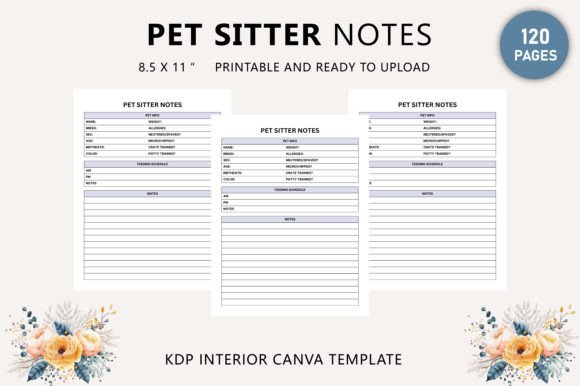
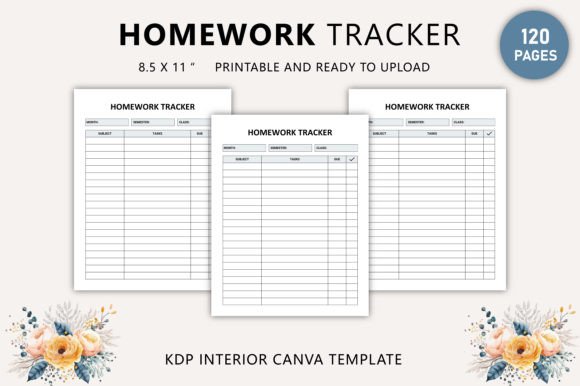
The Homework Tracker Canva Template isn’t just another printable PDF. It’s built from the ground up for real-world use—not theoretical organization. Its 120-page layout offers month-by-month, week-by-week, and daily tracking options, all formatted at standard letter size (8.5 × 11 inches) and optimized for professional printing: 300 DPI resolution, CMYK color mode, and no bleed. That means if you choose to print it—whether for a classroom binder, a student’s desk reference, or a homeschool portfolio—the output looks crisp, consistent, and publication-ready.
Equally important is its editable Canva link. This isn’t a locked or watermarked file—it’s fully customizable in Canva’s intuitive interface. You can adjust colors, fonts, icons, layout spacing, or even add your own school logo or motivational quotes. Because it’s hosted in Canva, no special software is required; changes save automatically, and collaboration is possible if you’re working with a teacher, tutor, or co-parent.
It’s also 100% original—designed specifically for academic tracking, not repurposed from generic planner templates. That shows in subtle but meaningful ways: subject-specific columns, space for due dates and submission status, checkboxes for revision cycles, and margin notes for teacher feedback or self-reflection prompts.
How It Compares With Other Tracking Approaches
Many people start with free tools—Google Sheets, Notion databases, or basic Word documents. These offer flexibility but often lack visual cohesion, accessibility cues, or intentional pedagogical scaffolding. A spreadsheet may track deadlines efficiently, but it won’t guide a middle-schooler through prioritizing tasks or visually signal overdue work. In contrast, the Homework Tracker Canva Template uses color psychology, clear typography hierarchy, and consistent iconography to reduce cognitive load—especially helpful for neurodivergent learners or those building executive function skills.
Compared to physical notebooks or bound planners, this template avoids the permanence trap: once something’s written in pen, correcting errors or reorganizing priorities becomes cumbersome. With the editable Canva version, adjustments take seconds—not minutes—and the PDF ensures portability without device dependency.
Some users consider subscription-based apps like My Study Life or Todoist. Those excel at push notifications and cross-device syncing but often require setup time, data input discipline, and ongoing access to Wi-Fi or app updates. The Homework Tracker Canva Template works offline, requires no account creation, and introduces zero learning curve for basic use. It meets learners where they are—without demanding technical fluency.
Strengths and Realistic Tradeoffs
Strengths include:
- Design integrity: Every page reflects intentional spacing, alignment, and visual rhythm—critical for sustained use over weeks or semesters.
- Print fidelity: CMYK and 300 DPI ensure accurate color reproduction and sharp text when printed professionally or at home.
- Customization depth: From swapping accent colors to adding custom headers or removing sections entirely, the Canva link supports nuanced personalization—not just superficial tweaks.
- No recurring cost: Once purchased, it’s yours—no monthly fees, no feature gates, no usage limits.
Tradeoffs to consider:
- No automation: It won’t sync with school LMS platforms (e.g., Canvas, Google Classroom) or auto-populate assignments. Manual entry remains necessary.
- Not interactive in PDF form: While the PDF is print-optimized, it’s not fillable in most PDF readers unless explicitly configured—so handwritten use is primary unless you annotate digitally with compatible software.
- Fixed page count: At 120 pages, it covers a full academic year—but doesn’t scale dynamically. Users needing multi-year continuity or highly specialized subject tracking (e.g., lab notebooks, thesis timelines) may need supplementary tools.
When This Template Fits—and When It Might Not
The Homework Tracker Canva Template shines in structured, routine-driven environments: semester-based courses, standardized curricula, or homeschooled schedules with predictable pacing. It’s especially effective for learners who benefit from tactile engagement (writing by hand), visual reinforcement (color-coded subjects), and low-friction consistency (same layout every week).
For example, a high school junior juggling AP Biology, honors English, and extracurricular rehearsals might use the weekly spread to map out reading deadlines alongside practice times—then highlight upcoming quizzes in red and draft submissions in blue. A parent supporting a child with ADHD could simplify the tracker by deleting less-relevant fields and enlarging checkboxes, using Canva’s editing tools to tailor focus.
Conversely, this template may be less ideal for users who rely heavily on reminders, calendar integration, or collaborative assignment sharing. If your workflow depends on receiving automatic alerts 24 hours before a deadline—or if multiple teachers need to update the same tracker in real time—a cloud-based app or shared document may serve better.
It also assumes a baseline level of self-direction. Younger students (under age 10) or those new to independent tracking may need adult scaffolding to begin—though the clean design and consistent layout do lower that barrier compared to denser alternatives.
Making an Informed Choice
Choosing a homework tracking system isn’t about finding the “best” tool—it’s about matching method to mindset, environment, and goals. Ask yourself:
- Do I prefer writing by hand or typing? (The PDF supports handwriting; Canva supports typing and design.)
- How much time am I willing to spend setting up or maintaining the system each week?
- Do I need reminders, syncing, or collaboration—or is clarity, consistency, and simplicity my priority?
- Will this be used solo, with a parent or tutor, or in a group learning context?
If your answers lean toward simplicity, visual reliability, and long-term usability without tech dependencies, the Homework Tracker Canva Template aligns well. Its dual-format delivery—editable Canva link plus print-ready PDF—means you’re not locked into one modality. You can test the layout digitally, refine it, then print only what you need—reducing waste and increasing intentionality.
And because it’s designed for longevity—not seasonal trends or platform updates—it remains relevant across grade levels, course loads, and learning styles. Whether used for a single summer session or multiple academic years, its utility scales with your needs—not against them.
In short, the Homework Tracker Canva Template stands out not for flashy features, but for thoughtful execution: high-resolution, adaptable, accessible, and grounded in how people actually plan, reflect, and follow through on academic work.