Sugar Skull Girls Coloring Pages
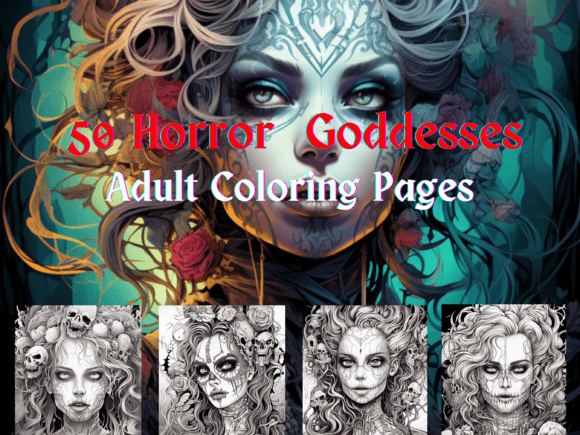
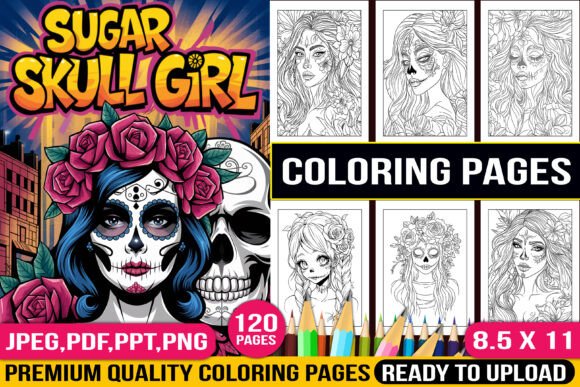
Step into a world where tradition meets modern artistry—Sugar Skull Girls Coloring Pages invite adults to explore intricate line work, symbolic motifs, and expressive femininity rooted in Día de los Muertos aesthetics. These aren’t just coloring sheets; they’re thoughtfully crafted visual prompts that balance cultural reverence with contemporary design sensibility. Each page features stylized female figures adorned with ornate sugar skull elements—roses, marigolds, lace, geometric patterns, hummingbirds, and delicate filigree—all rendered in clean, high-contrast black-and-white line art.
What makes this collection stand out is its intentional duality: it honors the spiritual symbolism of calaveras while speaking directly to today’s adult colorists who value both meaning and mindfulness. The designs avoid caricature or appropriation by centering respectful interpretation—soft facial features, grounded postures, and layered cultural references (like papel picado borders or pre-Hispanic textile motifs) woven organically into each composition.
Creative Possibilities Beyond the Page
This set unlocks more than relaxation—it sparks cross-disciplinary creativity. Designers use individual pages as base layers for digital collages, overlaying textures or blending modes in Photoshop to create social media assets or print-on-demand apparel. Educators adapt select illustrations for classroom discussions on Mexican folk art, symbolism, or cultural storytelling—pairing them with short historical notes or reflection prompts. Bloggers curate themed posts (“Coloring as Cultural Connection”) and embed downloadable previews to drive engagement and email sign-ups.
Freelancers building portfolio pieces can rework single images into cohesive mini-series: imagine one Sugar Skull Girl transformed across four seasonal palettes—ochre and sage for autumn, cobalt and coral for summer—each version retaining the original linework but shifting mood through color theory alone. That same image becomes a sticker sheet, a greeting card layout, or even a laser-cut wood template for crafters.
Practical Use Across Platforms and Audiences
For Amazon KDP publishers, the structure is purpose-built: 120 high-resolution JPG/PNG files (300 dpi, 8.5″ × 11″), organized into four intuitive folders—Floral Themes, Geometric Fusion, Mythical Elements, and Minimalist Calaveras. This organization supports rapid book assembly: you might compile Folder 1 + Folder 3 into a “Botanical & Mythic” volume, while Folder 4 pairs naturally with guided journaling prompts for a “Mindful Calavera” workbook.
The included PDF—also 300 dpi, KDP-tested—is formatted with bleed-safe margins and consistent spacing, eliminating common upload errors. Bonus cover images (10 JPG/PNG files) give immediate flexibility: use one as-is for a bold Amazon thumbnail, crop and layer text for a series banner, or recolor two versions to A/B test which resonates more with your audience.
Small business owners selling at local markets or craft fairs can print select pages on premium paper, bind them into small chapbooks, and pair them with colored pencils or metallic gel pens as curated gift sets. No need to reinvent the wheel—just add context. A note tucked inside might read: “Each skull celebrates life—not loss. Color her how she speaks to you.” That simple framing shifts perception from novelty to meaning.
Staying Consistent, Clear, and Audience-Friendly
Maintaining quality across 120 pages isn’t accidental—it’s engineered. Every illustration follows the same stroke weight logic (0.4–0.6 pt for fine detail, 1.2 pt for outer contours), ensuring uniform printing clarity whether used on newsprint or archival stock. Negative space is intentionally varied: some pages offer dense patterning for focus-seekers, others open up large breathing zones for those managing anxiety or visual fatigue.
To keep output original and on-brand, avoid over-editing the source files. Instead, apply subtle, repeatable enhancements: add a light halftone overlay in Illustrator for vintage texture, or batch-resize all covers to 16:9 for YouTube thumbnails. Consistency comes from restraint—not repetition.
When marketing to educators or therapists, emphasize usability: “No copyright barriers—use freely in non-commercial lesson plans or clinical settings.” For creatives, highlight adaptability: “Layer these lines under watercolor scans, vector trace for SVG cut files, or import into Procreate for animated timelapses.” Tailor the message—not the art.
Ideas You Can Launch This Week
- Instagram Challenge: Post one Sugar Skull Girl per day for 12 days, inviting followers to share their interpretations with a branded hashtag. Repost standout entries—this builds community while generating authentic UGC.
- Email Series: Send subscribers one free page weekly for five weeks, paired with a short note on its symbolism (e.g., “The butterfly represents transformation—not just in folklore, but in your own creative process”). End with a soft pitch for the full collection.
- KDP Bundle Strategy: Release three themed books using subsets of the collection—Sugar Skull Girls: Floral Dreams, Sugar Skull Girls: Geometric Souls, and Sugar Skull Girls: Minimal Calaveras—then offer them together as a discounted box set.
- In-Person Workshop Kit: Print 10 favorite pages, pair with a list of accessible materials (e.g., “Try Sakura Micron pens + Prismacolor pencils”), and host a low-cost local coloring circle. Document it—photos of real people engaging with the art build trust faster than any stock image.
Ultimately, Sugar Skull Girls Coloring Pages works because it meets people where they are: whether you're launching your first KDP title, designing a client’s wellness brand assets, or simply reclaiming 20 minutes of quiet focus after a long day. It doesn’t ask you to be an artist—it asks you to show up, choose a color, and begin. The rest unfolds naturally.
That’s the quiet power of well-designed creative tools: they don’t shout for attention. They hold space—then let you fill it with intention.